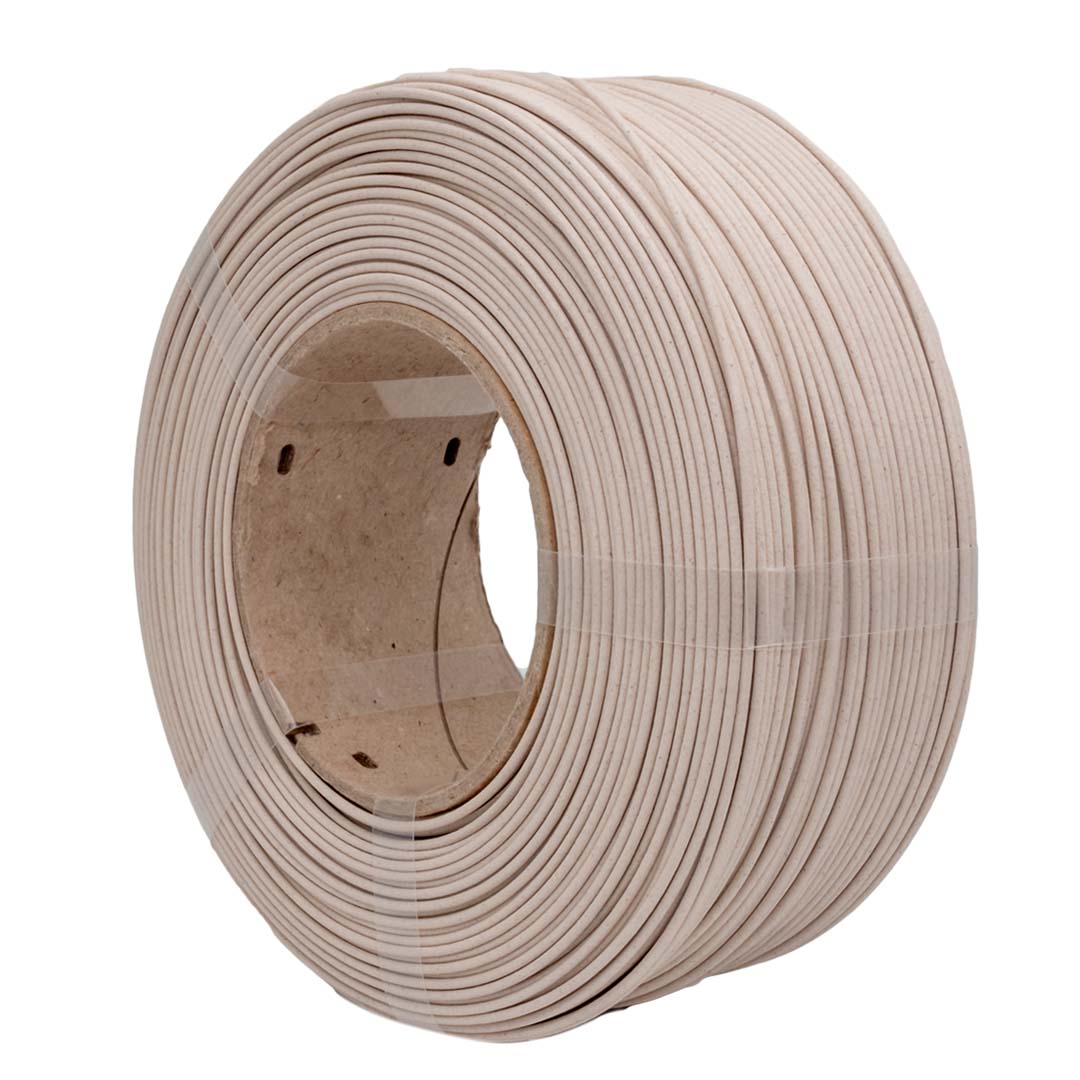
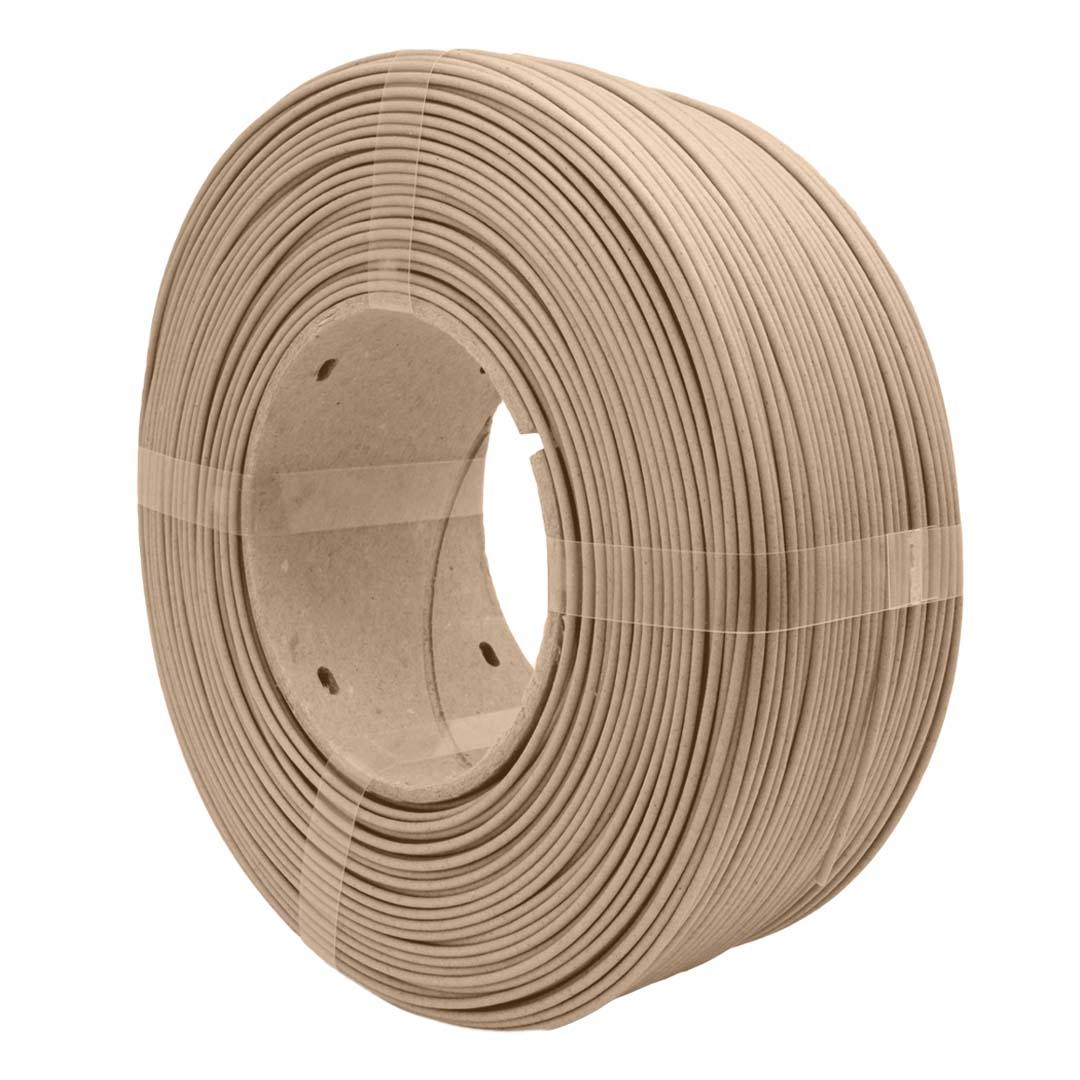
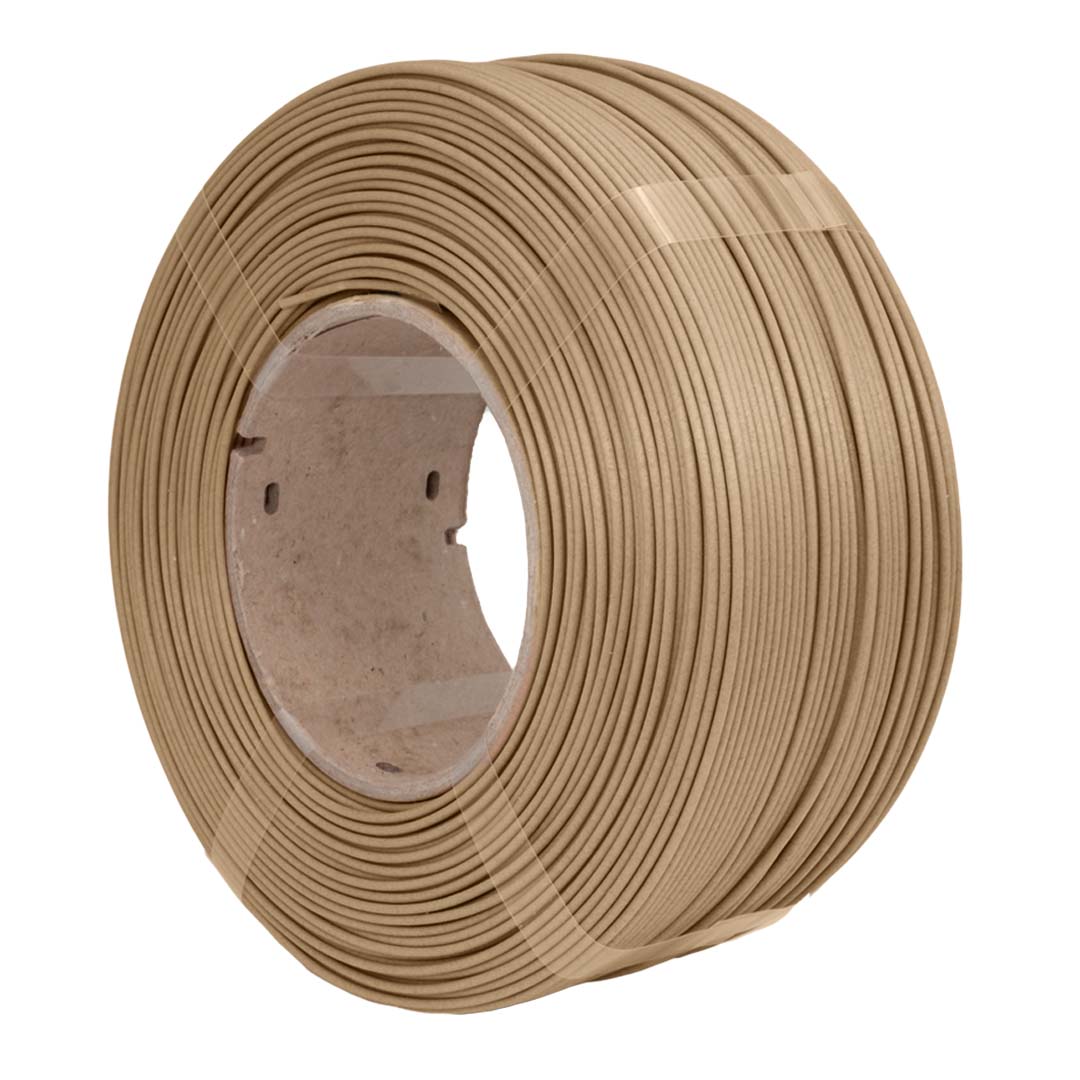
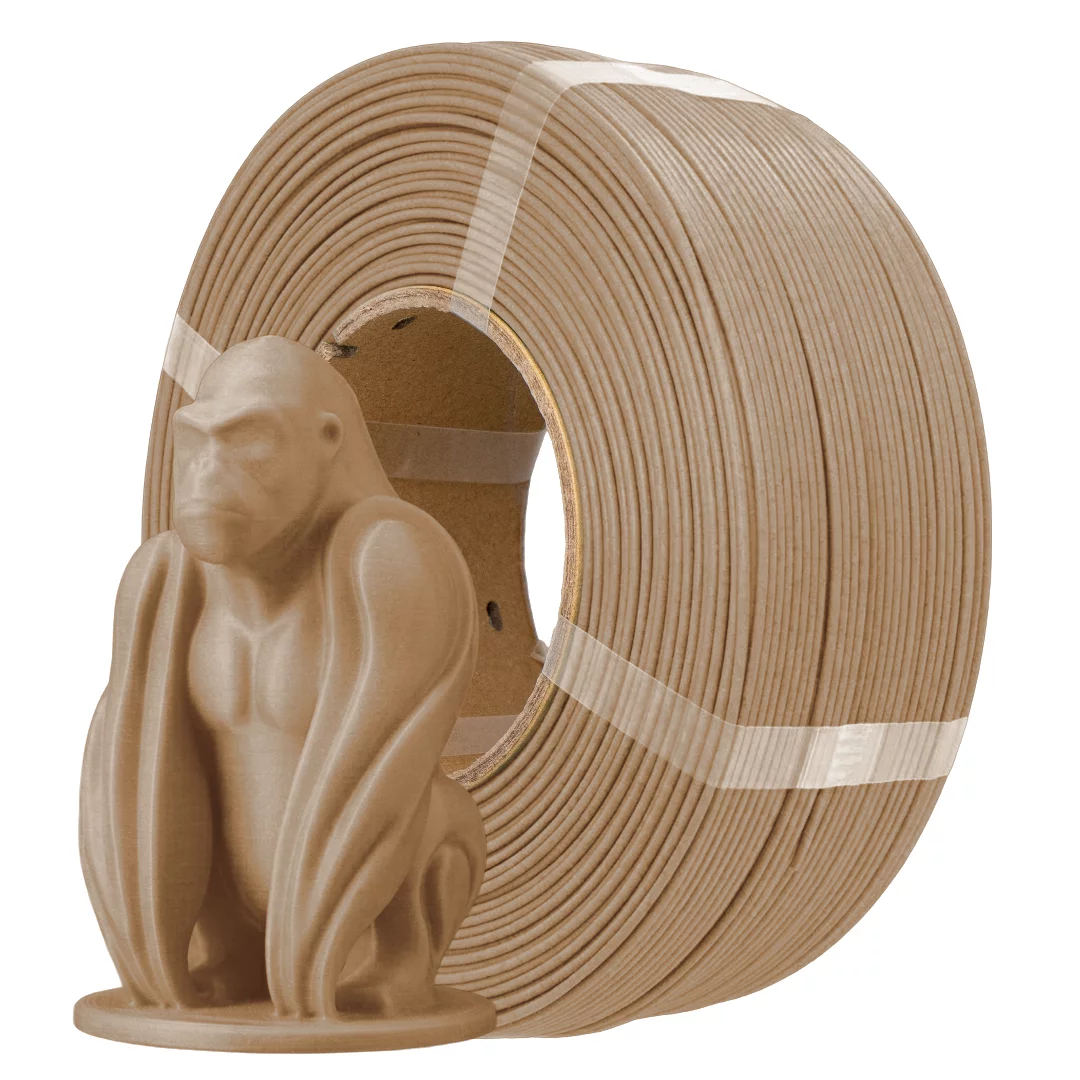
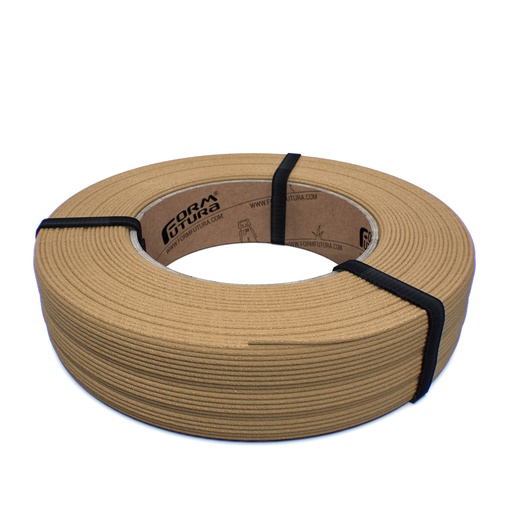
Composite · Wood-filled PLA
IntermediateWood-Fill PLA
Wood PLA · Woodfill · Laywood
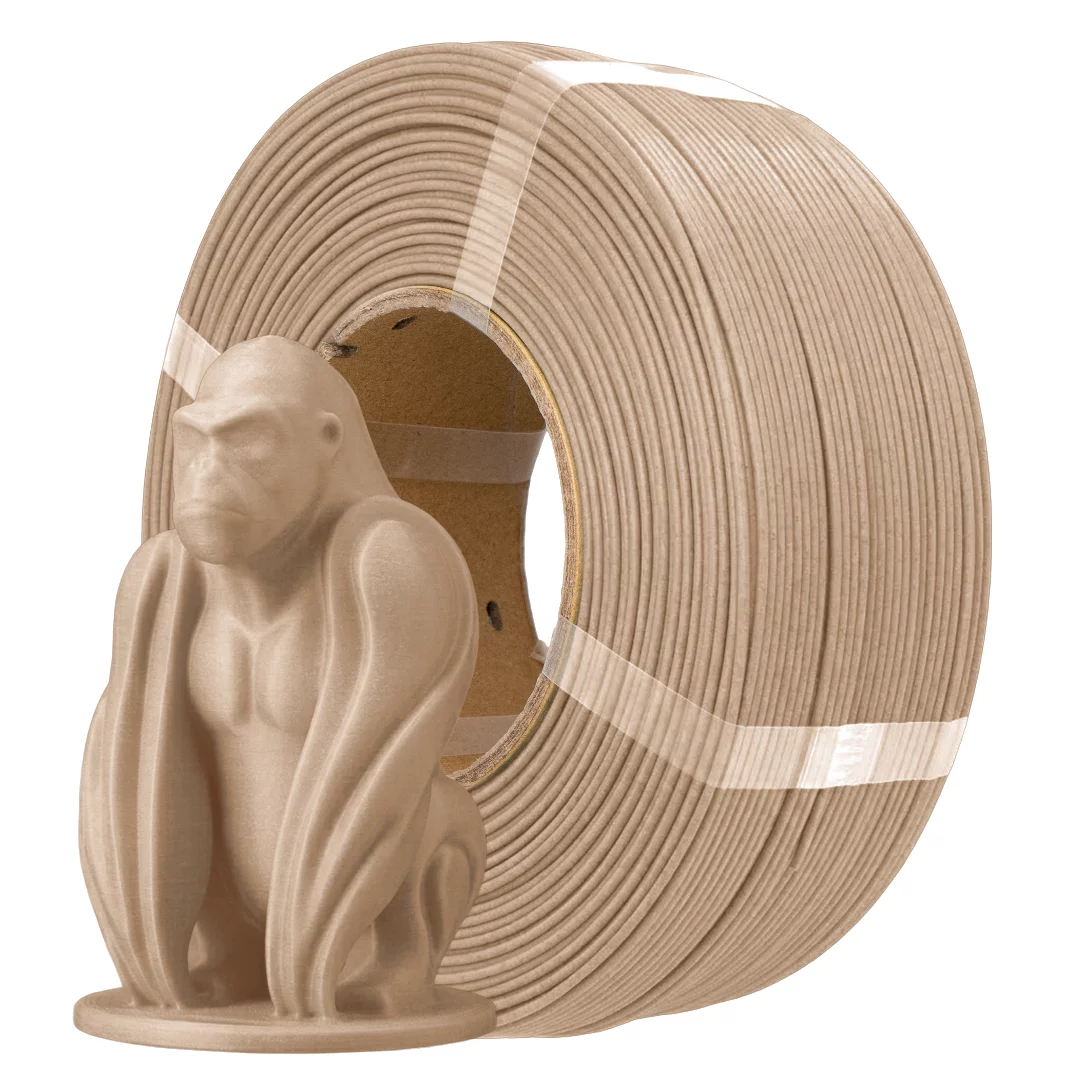
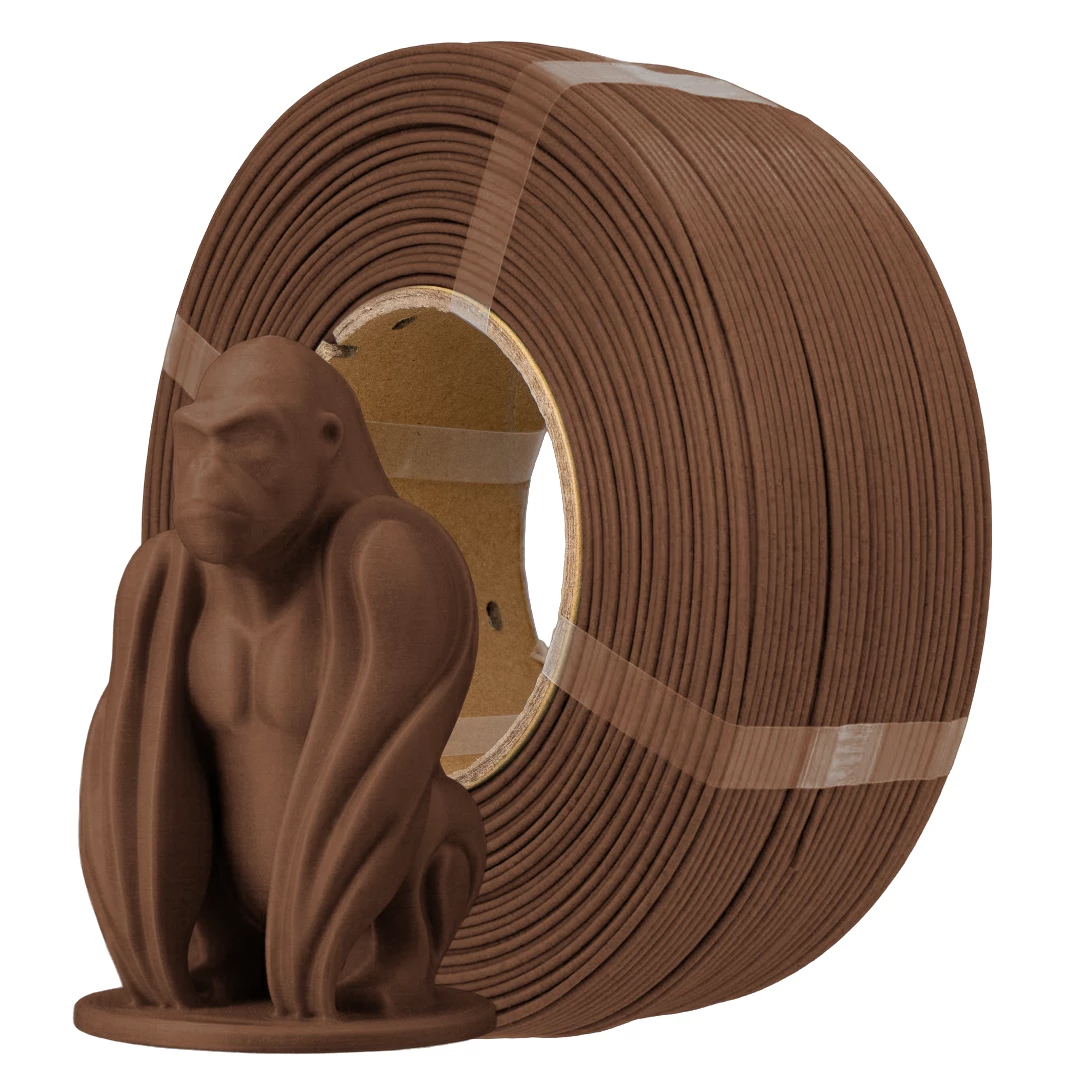
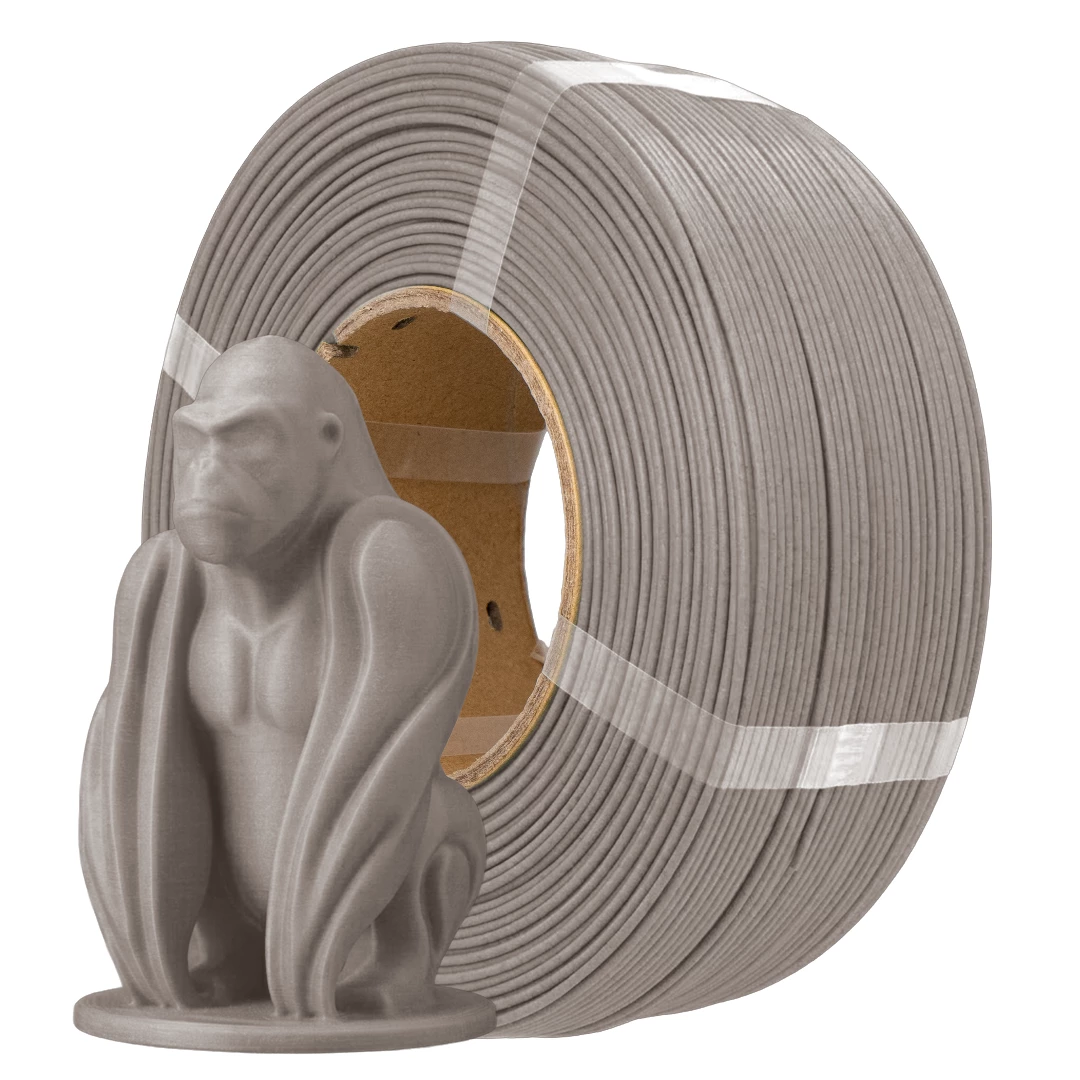
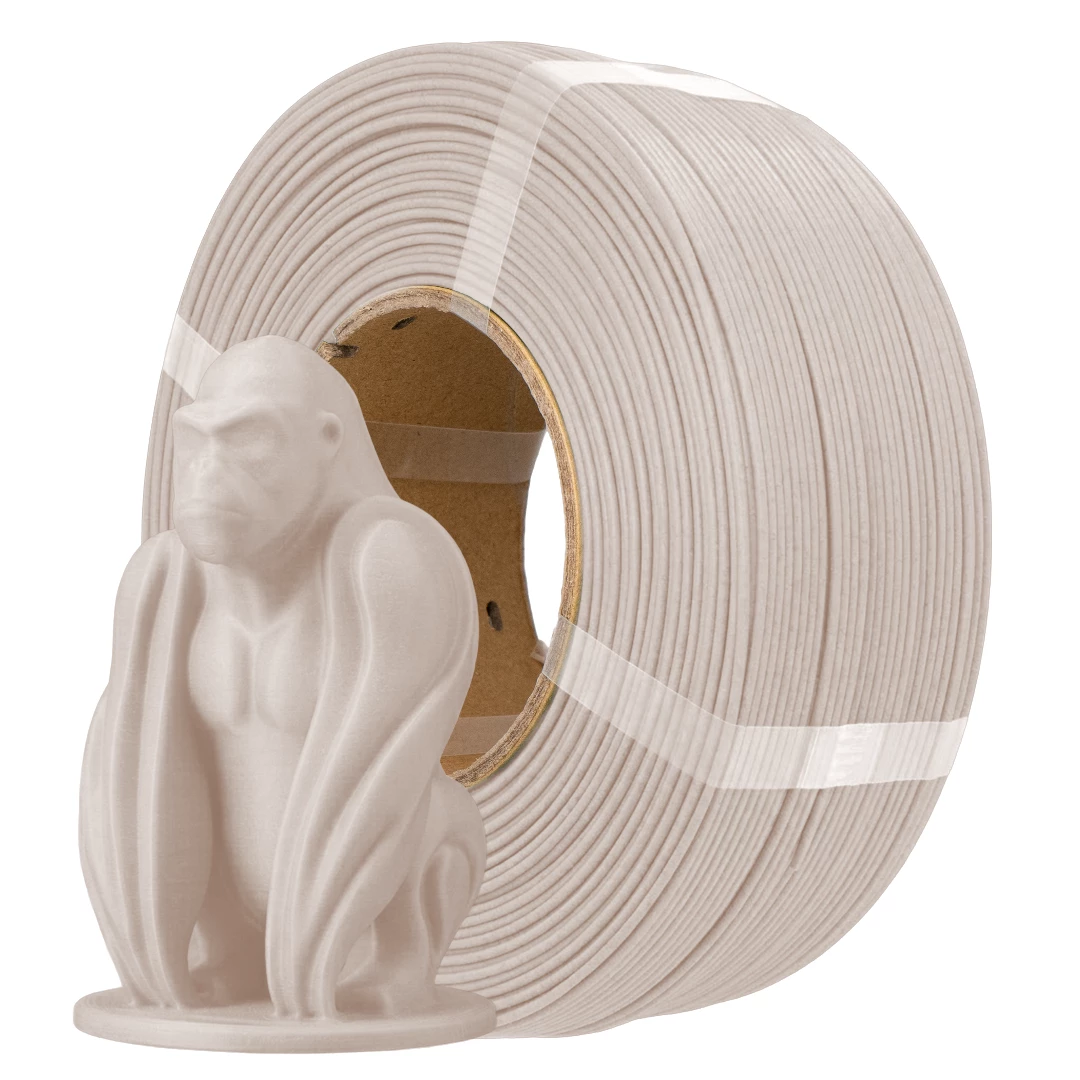
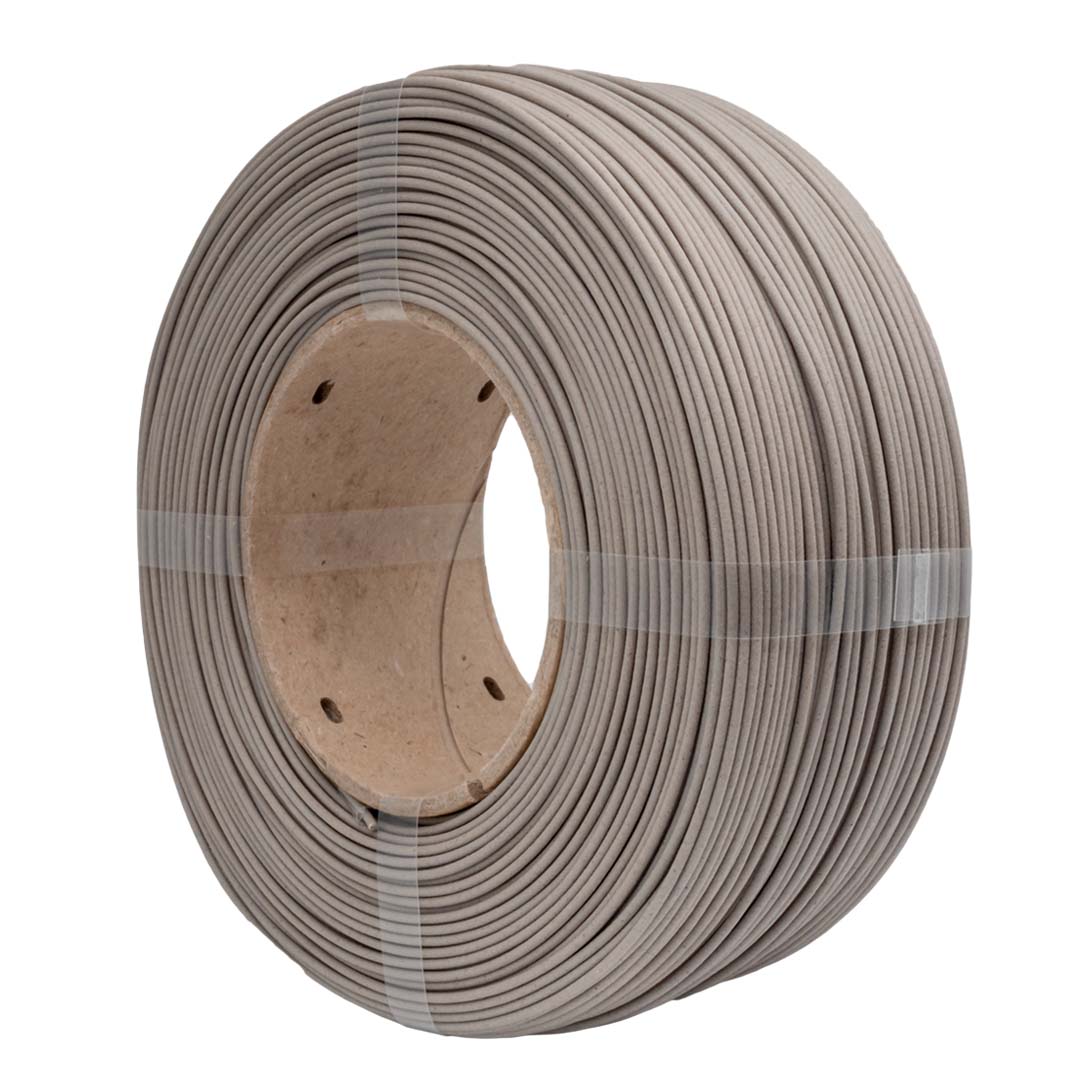
PLA blended with real wood fiber — it sands, stains, and even smells like wood. Decorative-first; needs a hardened nozzle.
Print temperatures
Nozzle 190–220 °C Bed 50–60 °C
Wood-fill PLA prints objects that can be sanded and stained like wood — Kai Parthy's “Laywood” was among the first desktop wood composites. Varying the nozzle temperature even scorches the wood flour to print darker “grain” bands.
It's decorative-first: the wood content weakens the part and makes it more abrasive and clog-prone than plain PLA.
Strengths & trade-offs
- Authentic wood look, smell, and texture
- Sandable and stainable
- Matte natural finish
- Temperature can vary the “grain” color
- Hides layer lines
- Abrasive — wood particles need a hardened nozzle
- Clog-prone (use a ≥0.5 mm nozzle)
- Weaker and more brittle than PLA
- Absorbs moisture
- Finicky flow
Best for
Decorative objectsPicture framesFaux-wood propsSculpturesRustic homeware
Did you know
- Wood-fill PLA can be up to ~40 % actual wood by weight — a genuine wood-plastic composite.
- Raising the nozzle temperature lets you print darker “grain” bands on a single object.